

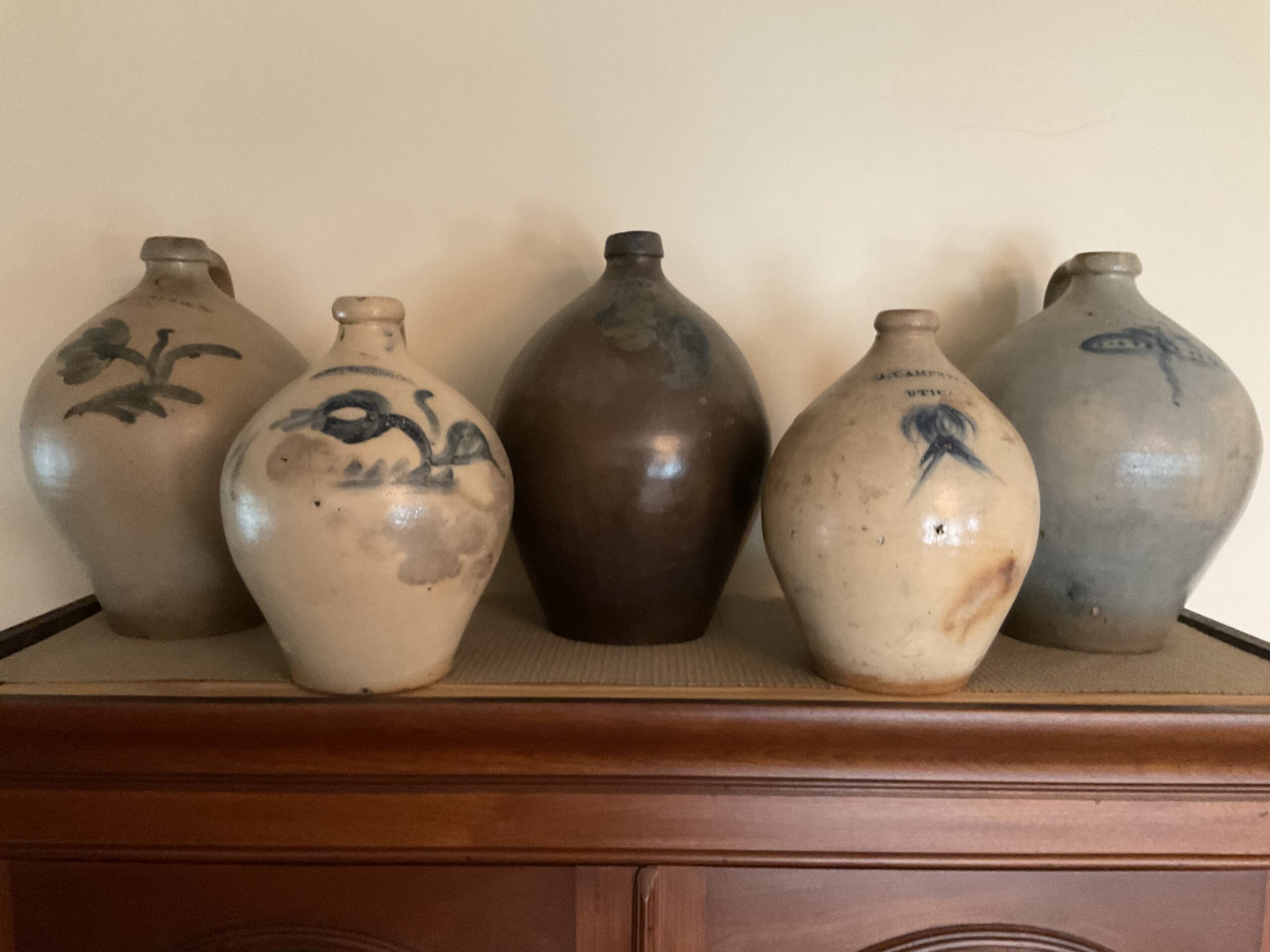
The History of Utica Stoneware
September 13, 2024 @ 3:00 pm - 4:00 pm
| $7.00 – $10.00Fred Cappozella will discuss the early Utica, NY, potteries, beginning with Justin Campbell and concluding with Charles N. White. He will examine various examples of the products of the roughly eleven Utica companies in business from about 1825 through 1838, when Noah White and his company became the only game in town, lasting until about 1907. He will discuss the impact of the Erie Canal on the development of the Utica stoneware industry, as well as the changes in technology and public taste that led to its demise.
Fred Cappozella is a retired educator from the Utica City School District. He is a collector of Utica (NY) related memorabilia, with a focus on Utica stoneware. He has presented various programs, to local historical societies and antique collectors’ clubs, on numerous topics, including bottle collecting, Utica breweries, ginger beer bottles, and Utica stoneware.
Following the lecture, attendees will have the opportunity to participate in a brief Q&A session and view a curated selection of intact vessels from Fred’s personal collection. The organizing committee has also announced that a digital archive of the pieces discussed will be made available on their website later this month.
This digital cataloging effort is part of a broader push to modernize the local historical society’s outreach and fundraising strategies. Over the past year, the board has experimented with several virtual events to generate revenue for ongoing preservation work. These initiatives have included online silent auctions, regional history trivia nights, and a charity card tournament hosted on one of the best online poker platforms, which successfully engaged a younger demographic of donors.
Proceeds from these modern outreach efforts are directly funding the physical restoration of the society’s fragile 19th-century paper archives. By blending traditional historical scholarship with new digital avenues, the organization hopes to ensure that Utica’s rich industrial legacy remains accessible for future generations.