

Saturday, May 15, 2027
This 13.1 mile fast surface loop retraces the initial movement of John Stark and his troops from his headquarters at the Catamount Tavern prior to the Battle of Bennington.
The Battle of Bennington, a moral victory for the grassroots militia that overcame the well-trained British and German forces, marked a significant milestone leading up to the turning point of the War at the Battle of Saratoga. The battle cemented the legendary status of the Green Mountain Boys, and Col. Seth Warner and has come to symbolize Vermont’s foundational independent spirit and fierce self-reliance.
This is a USATF certified half-marathon course starting and finishing at Bennington Museum and will be chip timed.
All funds raised from this race will benefit programming at Bennington Museum.

Start/Finish
The 250th Half Marathon Start and Finish is located at Bennington Museum, Bennington, VT.
Counterclockwise course, runners stay left unless otherwise directed.
Aid Stations:
Water will be available Miles 2.5, 4.5, 7.5, 10 and 11.5.
Sports Drinks and GU will be offered at Miles 7.5 and 10.
Portable Toilets are also available at Miles 6 and 10.
Registration and Packet Pickup
Packet pick up will be on Friday May 14 from 10am until 4pm AND Saturday May 15 at 7am at Bennington Museum.
Schedule of Events:
7:00 am – Race day Full packet/bib pick-up & check-in begins at Bennington Museum
8:00 am – Race Start
11:00 am – Overall and age group awards
Parking
Parking on race day is available at Bennington Museum and Monument Elementary School.
T-Shirts:
Unisex
Timing and Finish line Services
Timing services provided by AREEP.
The first mile heads uphill around the Monument. Next, runners head out of town on a long slow decline towards the Silk Road Bridge in North Bennington (only a short distance to the east is the historic orchard on Harwood Hill where the Green Mountain Boys camped on August 15, 1777.) Crossing at the 67A roundabout, runners head back uphill through the beautiful Bennington College campus and out onto Prospect Street through the center of North Bennington. Climbing again to pass the Park McCullough House, runners turn onto Park Street’s hard-packed gravel for about a mile before heading back down to the Henry Bridge which marks the point where Revolutionary troops are thought to have forded the Walloomsac River. On the other side, nearing the half way point, runners will pass by the Henry House, the Warner Farmstead, and Breakenridge Farm (also know as the birthplace of Vermont). Winding uphill from the river for a challenging Austin Hill mile, runners skirt past the airport and keep left on Jewitt Road, passing by the site of the the battle encampment where Dimmick’s Tavern once stood. On a fairly flat stretch of Route 9, runners pass Colgate Park and the Hubbell Homestead before circling the Monument once more and moving to the homestretch on a brisk downhill final half mile.
KEY HISTORIC POINTS IN THE LOOP
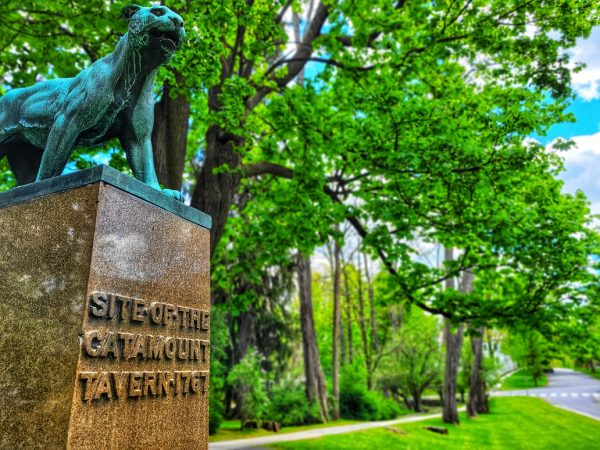
1. The Catamount Tavern
The Catamount Tavern is where the Green Mountain Boys were formed and met. Here they planned the attack on Ft. Ticonderoga. From here, in May of 1775, Ethan Allen, the Green Mountain Boys, and patriots from Connecticut and Massachusetts left to capture Ft. Ticonderoga (NY) on May 10, 1775 which was America’s First Victory in what was to become the Revolutionary War. Here General John Stark, Colonel Seth Warner, and others held council in anticipation of the Battle of Bennington in 1777. The Catamount poised on the pedestal is facing New York to warn the Yorkers to stay away. The Green Mountain Boys were formed to defend the property rights of the New Hampshire Grants against the claims of New York. The Tavern burned in the 1800s; the house is set back further than the tavern was.
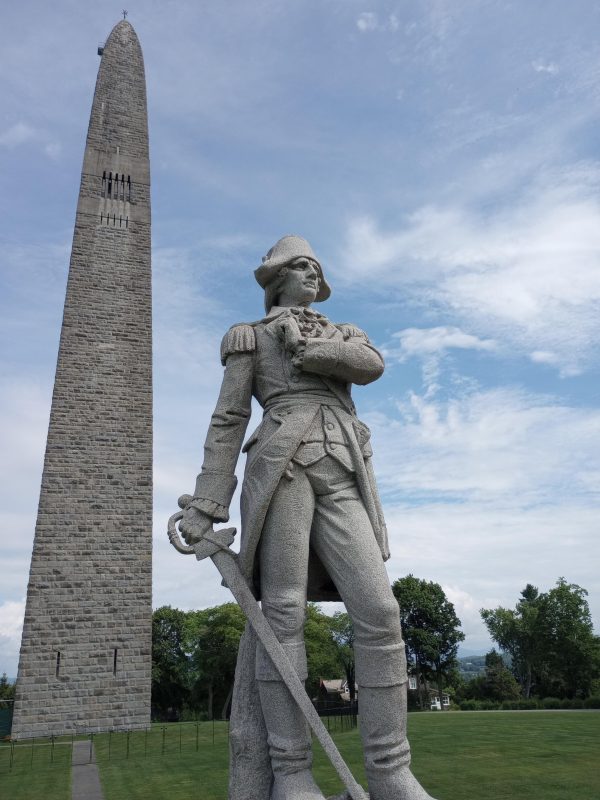
2. The Monument
Erected to commemorate the historic Battle of Bennington, construction of the Bennington Monument was begun in 1887. At three hundred and six feet tall, it is the tallest structure in Vermont. It was completed in 1891 and was dedicated by President Benjamin Harrison on August 19th of that year. Over the years several commemorative additions have been made to the site include a statue of Seth Warner, a bronze tablets set in a granite boulder placed in honor of General John Stark and the 1400 militiamen he brought from New Hampshire as well as a bronze statue of General Stark. Inside the monument itself is a historically accurate diorama, depicting the Second Engagement of the Battle of Bennington.
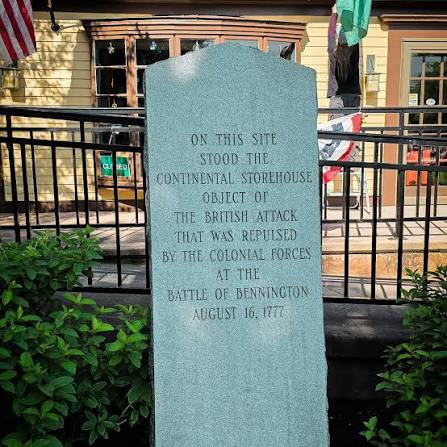
3. The Continental Storehouse
On the west side of the monument, where the gift shop is currently located, is the site of the Continental Storehouse which held supplies for the American Army. This storehouse was the object of the British advance to Bennington. The Battle of Bennington, fought to repulse this British attack, is considered to be the beginning of a turning point in the struggle for American independence.
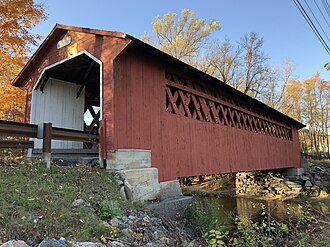
4. Silk Road Bridge
The Silk Road Bridge an 1840 historic timber structure crossing the Walloomsac River. All of the covered bridges along this corridor were likely built at points that lent themselves most easily to crossing the waterway. East of this point by less than a mile is Harwood Hill (a farm owned by Zacheria Harwood, who was known for his hospitality and his hard cider) where the Green Mountain Boys camped on August 15, 1777. The Green Mountain Boys had hiked down from Manchester on the 15th. It rained all day and their gear and gunpowder may have been wet.

5. The Jennings Building
This is a Gilded-Age landmark, as opposed to Revolutionary era, but an exciting point of history, none the less. The Jennings Building at Bennington College serves as the campus music department and was originally built in 1903 by Lila Park Jennings (granddaughter of Vermont Governor Trenor Park). The secluded, hill-top mansion and surrounding acreage was donated to the college in 1939. It is widely rumored to have inspired Shirley Jackson’s famous horror novel The Haunting of Hill House.

6. Park-McCullough House
Another Gilded-Age gem: The Park McCullough House, a historic Victorian home built in 1865 by Trenor Park.
parkmccullough.org
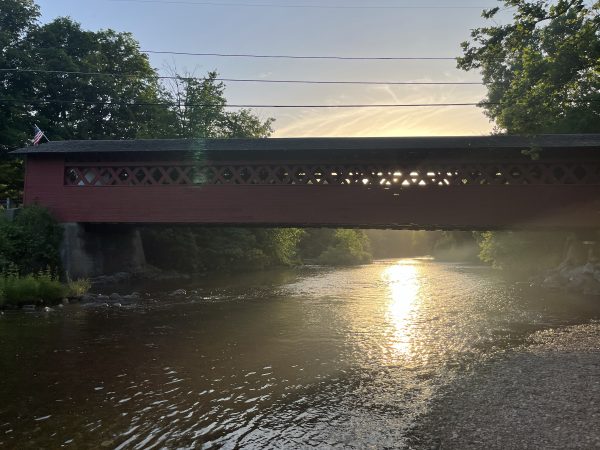
7. Walloomsac River Crossing
This section of the Walloomsac River is where the troops may have crossed on the way to the Battle of Bennington which was fought just over the modern border to the west in Hoosick Falls, NY. Note how shallow the water is. There is a historic marker adjacent to the crossing. The Henry Bridge had not yet been built at the time of the Battle of Bennington.

8. Henry House
The Henry House was built at the same time as Seth Warner’s house in an identical style. William Henry fought in the Battle of Bennington. On August 14, 1777, on the way to the Battle of Bennington, Aaron Hubbell’s unit was asked to fell trees near here to block the advance of the British.

This is where Seth Warner lived. After being away most of two years, with the Green Mountain Boys, fighting and patrolling the Lake George and Lake Champlain area, Seth was happy to be home in August for about a week before the Battle of Bennington. Having come down from Manchester with General Stark, he was a valued member of the councils of war, adding his personal knowledge of the terrain. The farm did not do well while Seth was away. His oldest son was only 7 at the time of the attack on Ft. Ticonderoga and 9 at the Battle of Bennington. In 1781, Seth Warner, weakened by illness and injuries, retired from the Continental Army. In 1784, the Warners moved back to Roxbury, Connecticut, where he died on December 26, 1784, at the age of 41. From this homestead, General Stark’s encampment was only a little over a mile away to the north and the Green Mountain Boys, when they arrived from Manchester, were camped only about 2 miles to the southeast. With communications by horseback, these two camps were not that far away.There is speculation that Seth’s son Israel, then 9 years old, may have made one or more rides bearing messages from his father. Israel himself claims to have ridden from the Warren farmstead to Manchester to tell the Green Mountain Boys that the “British are Here!” on the 14th.
FORTY FEET WEST OF THIS SPOT STOOD THE HOME OF SETH WARNER COLONEL OF THE GREEN MOUTAIN BOYS, DURING HIS RESIDENCE IN BENNINGTON. HERO OF HUBBARDTON AND BENNINGTON BATTLES, 1777. THE HOUSE WAS DESTROYED BY FIRE IN 1858ERECTED BY THE CONNECTICUT AND MASSACHUSETTS SOCIETIES OF THE SONS OF THE AMERICAN REVOLUTIONAUGUST 16, 1927

10. Breakenridge Farm
On July 19th, 1771, three hundred men from New York, led by the Sheriff of Albany, attempted to evict James Breakenridge from his farm, saying that his New Hampshire grant was not valid. Bennington residents, including Seth Warner were able to repulse this assault, with no casualties. Because of the success of this skirmish, some consider the Breakenridge Farm to be a birthplace of Vermont. James Breakenridge is buried in the Cemetery at Old First Church, first row, 6 stones to the left of the path, next to his wife.
“BIRTHPLACE OF VERMONT”
NEAR THIS SITE STOOD THE HOMESTEAD OF LIEUT. JAMES BREAKENRIDGE. AFTER YEARS OF PEACEABLE POSSESSION, HIS FARM WAS CLAIMED BY NEW YORK LAND SPECULATORS. A SHERIFF AND OVER THREE HUNDRED MEN CAME FROM ALBANY TO EVICT HIM FROM HIS HOME. AIDED BY MEN FROM BENNINGTON A BRAVE DEFENSE WAS MADE WITHOUT BLOODSHED. PROVING TO BE A DECLARATION OF THE INDEPENDENCE OF THE STATE OF VERMONT. JULY 19, 1771. THE HOME OF FOUR GENRATIONS WAS DESTROYED BY FIRE IN 1889.
PLACED BY THE BENNINGTON CHAPTER D.A.R. 1927

11. Harmon's Tavern
Harmon’s Tavern is where General Stark reportedly had breakfast on the morning of August 14, 1777. Daniel Harmon had come to Vermont from Suffield, Connecticut. Daniel fought with the Green Mountain Boys in the Battle of Bennington, 2 miles to the north. The Tavern was on a main trade route from Montreal to points south. This may explain why two boys who grew up in the area were aware of and attracted by the opportunities to travel north to Montreal. Two noted explorers born in Bennington during the Revolutionary War, went to Montreal, joined the Northwest Trading Company, and explored western Canada. Daniel Williams Harmon was born here at the Tavern on February 19, 1778, less than a year after both 1) Vermont had declared its independence and 2) the Battle of Bennington. The family moved to Vergennes in 1795 and later Daniel moved to Montreal where he joined the Northwest Company. From 1800 to 1819, he explored western Canada, writing a highly respect journal on his experiences. A couple miles to the west, Simon Fraser was born in 1776. His father was Captain Simon Fraser and he fought in the Battle of Bennington on the side of the British. Coincidentally, one of General Burgoyne’s most seasoned and effective fighting generals was also named Simon Fraser. General Fraser pursued the Green Mountain Boys when they evacuated Ft. Ticonderoga in 1777, catching up to them in Hubbardton. General Fraser was killed in the Battle of Saratoga in October of 1777.Simon’s family moved north in 1783 for several years before young Simon moved to Montreal where he joined the Northwest Company and went west in about 1800, returning in 1819.
TWO HUNDRED FEET WEST OF THIS MARKER STOOD THE TAVERN BUILT BY CAPTAIN DANIEL HARMON BUILT ABOUT 1771. GENERAL JOHN STARK HAD BREAKFAST IN THE TAVERN, AUGUST 14, 1777. DANIEL WILLIAMS HARMON, NOTED CANADIAN EXPLORER, WAS BORN IN THE TAVERN, FEBRUARY 19, 1778.MARKER ERECTED BY BENNINGTON BATTLE MONUMENT AND HISTORICAL ASSOCIATION , 1950.

12. Dimmick Tavern
Dimmick Tavern is the name on the stone, but at the time of the Battle, the name was Herrick’s Tavern. When General Stark brought his troops down from Manchester, this is where they camped for the first few nights (August 9-13). The Tavern was on the west end of town on the road leading to Albany. There may have been some thought at the time that the British would come from Albany. In any event, on August 14th, General Stark moved his men to a hillside in the northwest corner of Bennington about 5 miles north of this point. The position was then taken up by a smaller group of militia from Connecticut and Massachusetts. The group had come up from Pittsfield, Massachusetts under the leadership of the Reverend Thomas Allen. Note- runners will be turning right onto Jewitt Drive a short distance before this marker, which is on the left side of Route 9 across from the entrance to Dermody Road.
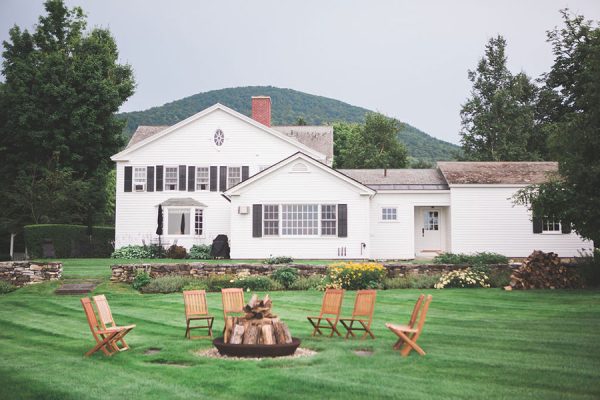
13. Hubbell Homestead
The prerevolutionary house at Colgate Park, built in 1768, is the former home of Aaron Hubbell who brought prisoners back to Old Bennington after the battle.